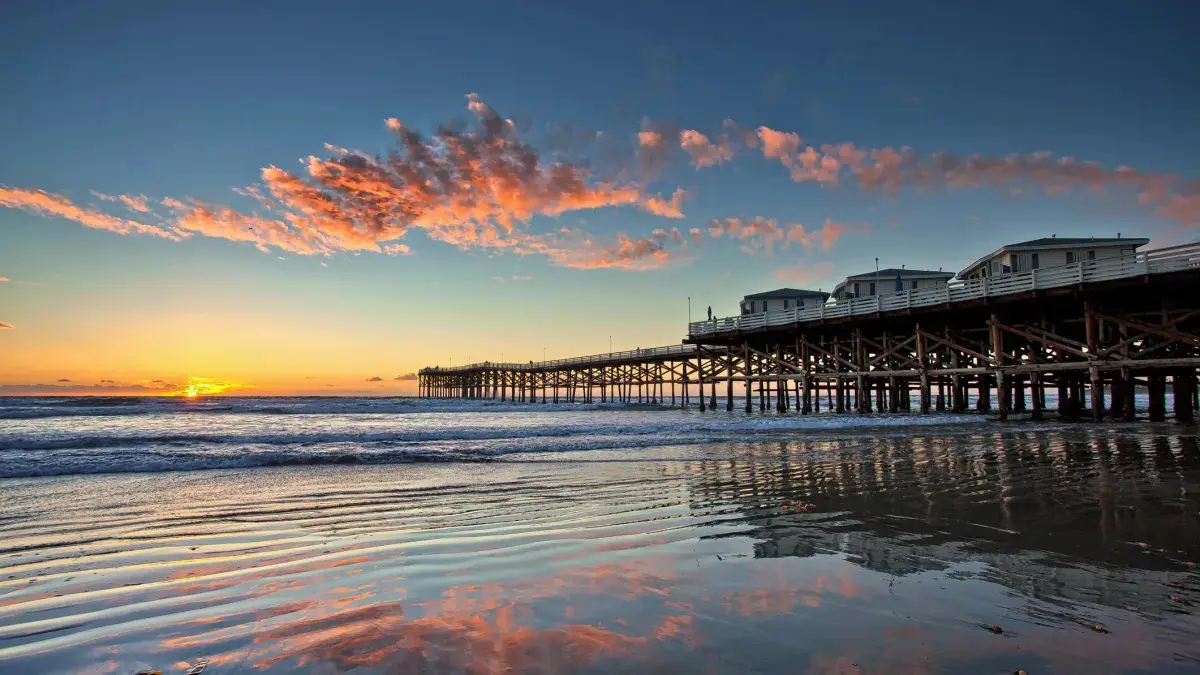
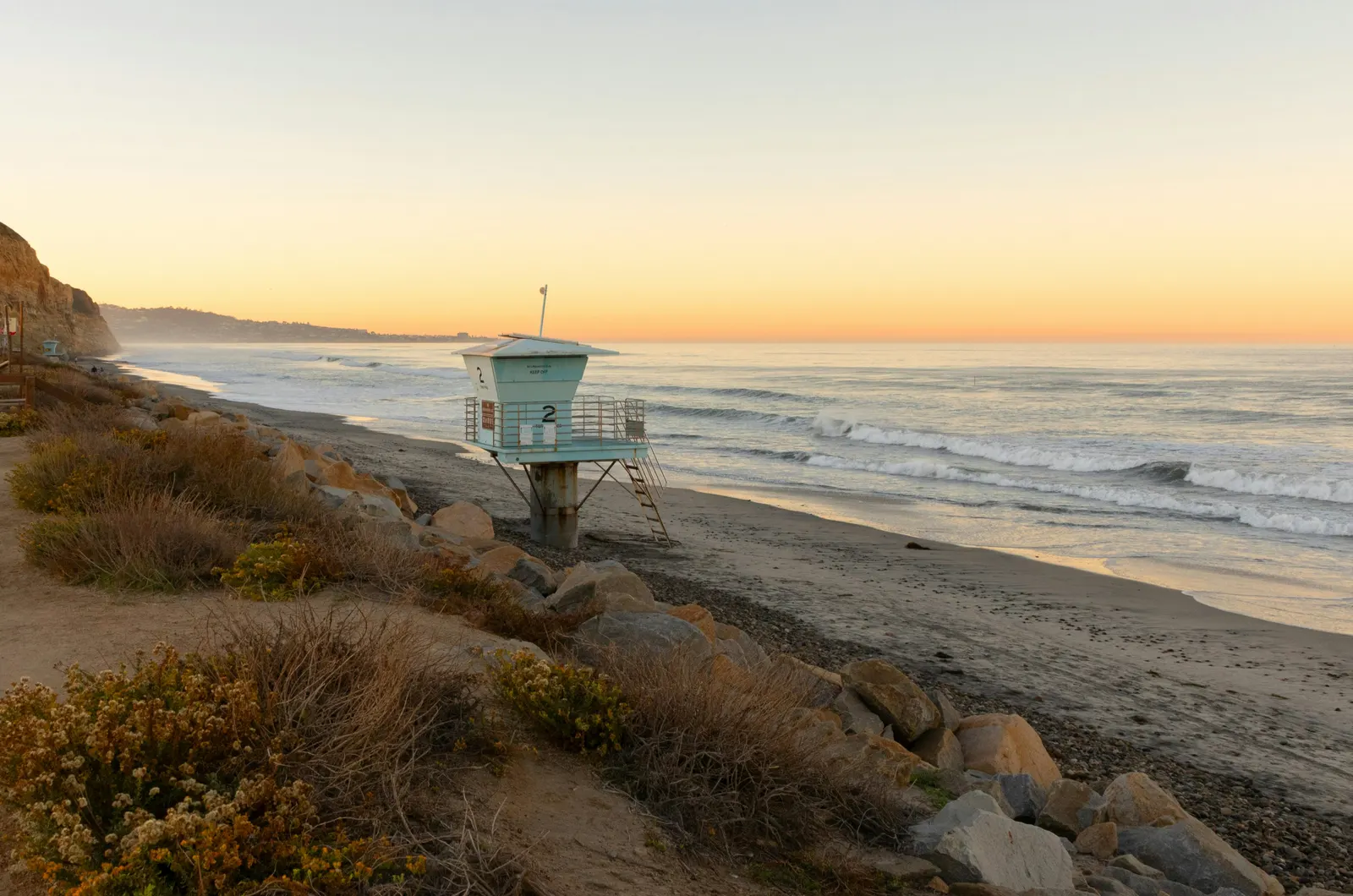
Most people book San Diego for June, July and August, and skip September. The weather data says that's backwards.
San Diego's September is warmer than its June — and considerably sunnier. Every number below is from public climate records, and every one of them is checkable. We've linked the sources so you can.
September is 5°F warmer than June
Using the official 1991–2020 climate normals for San Diego:
| Average high | |
|---|---|
| June | 71°F |
| July | 75°F |
| August | 77°F |
| September | 76°F |
September runs about five degrees warmer than June, and sits within one degree of August — the warmest month of the year. If you pictured September as the start of autumn cooling, that's a Midwest or East Coast instinct. It doesn't apply here.
June is San Diego's least sunny month
This is the part that surprises people. San Diego averages more than 260 sunny days a year, but they are not spread evenly, and June gets the worst of it.
Locals call it "June Gloom" — a marine layer that rolls in off the Pacific overnight and often doesn't burn off until afternoon, sometimes not at all. It peaks in late May and June. In June, San Diego sees only about 57–58% of its possible sunshine, the lowest of any month in the year.
By September the marine layer has largely gone. Mornings start clear. You get the beach day you actually pictured when you booked.
The ocean is warmest in late summer — and September holds it
Water temperature at Scripps Pier in La Jolla, from the National Oceanographic Data Center's Coastal Water Temperature Guide:
| Average ocean temp | |
|---|---|
| June | 64–65°F |
| July | 66–67°F |
| August | 68°F — the year's warmest |
| September | 66°F |
Being straight with you: the ocean in September is only a degree or two warmer than June, not dramatically so. August is the real winner for water temperature. If swimming is the whole point of your trip, aim for August.
If you want warm air, clear mornings and a beach that isn't shoulder-to-shoulder, September is the better month.
The part the weather data doesn't show
School is back in session across most of the country by early September. The beaches, the boardwalk and the restaurants empty out noticeably after Labor Day, while the weather stays summer-like well into October.
That's the actual case for September: the same beach, better light, fewer people.
Planning a September trip
A few things worth knowing if you come in the shoulder season:
- Mornings are clear. In June you'd often wait until noon for the sun. In September you can plan an early start.
- Evenings cool off faster than in July or August. Bring a layer for after sunset — especially if you're out on the water or driving around after dark.
- It's easier to book. Accommodation, restaurants and rentals in Pacific Beach and Mission Beach all loosen up considerably after Labor Day.
Getting around
A street-legal golf cart is one of the better ways to see the beach neighborhoods in shoulder season — Pacific Beach, Mission Beach, Mission Bay and La Jolla are all close together, parking is far easier than in peak summer, and the weather is genuinely made for an open-air cart.
Our 6-seat street-legal carts rent for from $160 the first day and $130 each additional day, with a refundable $200 deposit per cart. We deliver in the beach communities, or you can pick up and unlock the cart yourself with a code — no counter, no waiting in line.
Check availability for your dates →
Sources
- Average high temperatures — 30-year climate normals, 1991–2020, via Current Results
- Ocean water temperatures — measured at Scripps Pier, La Jolla; National Oceanographic Data Center Coastal Water Temperature Guide, via Current Results
- Percent of possible sunshine by month — San Diego International Airport averages; see also NOAA's climate of San Diego report
Climate normals describe long-run averages, not a forecast. Any individual September can run cooler or cloudier than the average.